 Skip to main content
Skip to footer
Skip to main content
Skip to footer

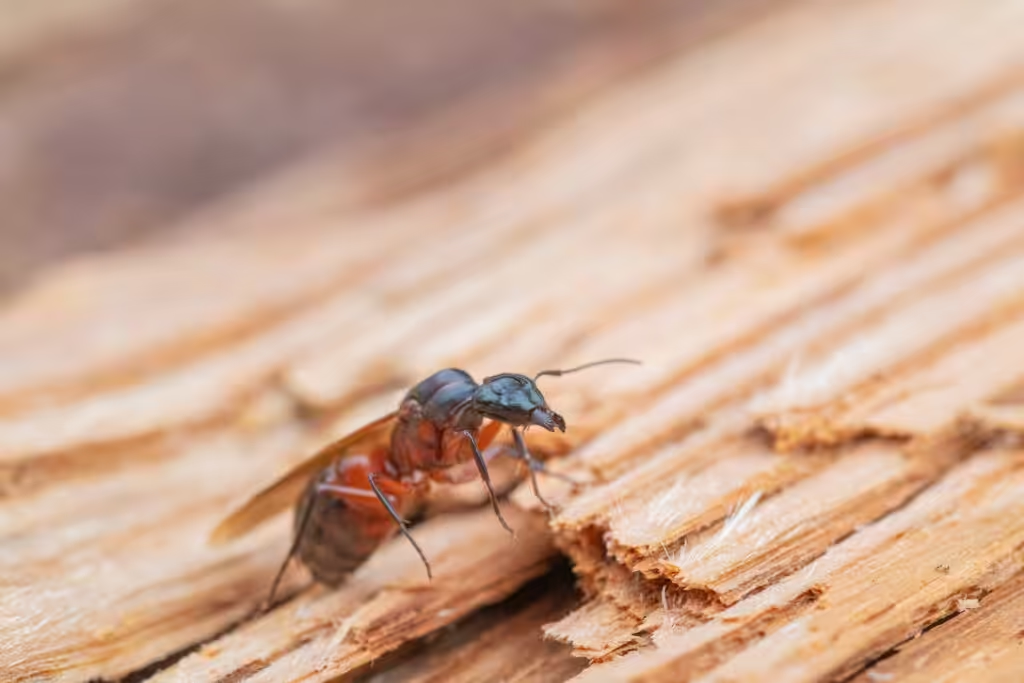
July is when the calls start coming in about termites. Nine times out of ten, it’s flying ants, and while that’s the less alarming problem, a swarm inside your house still signals that a colony is established somewhere close to your living space.
Winged ants showing up indoors isn’t random. There’s a specific reason it happens, and knowing what you’re looking at makes the difference between treating the right thing and spending months dealing with the same swarm on repeat.
What Flying Ants Are
Ants with wings catch people off guard because the winged form looks nothing like the workers you’re used to seeing on a sidewalk or along the kitchen counter. The two look different because they do entirely different jobs, and that distinction matters when you’re trying to figure out what you’re dealing with.
Why Ants Grow Wings
Wings on an ant signal one thing: reproduction. A mature colony produces winged ants, called alates, when it’s ready to expand. These are not workers. Their only job is to leave the nest, find a mate, and start a new colony somewhere else. After mating, the females shed their wings and begin laying eggs. The scattered wings you find on windowsills and floors are usually a sign the swarm has already peaked and is winding down.
Finding winged ants inside your house means the colony producing them is somewhere in or directly adjacent to the structure. Swarmers don’t travel far before mating. If ants are emerging from a wall gap, a ceiling joint, or a crack in the floor, the nest is close by. A single ant wandering in from outside is one situation; a swarm pushing through the walls is something else entirely.
Why Ants Fly in July

Ant colonies time their swarm events to weather, and in the Midwest, July delivers exactly the conditions they’re waiting for. No other month in the region hits that combination of heat and humidity as consistently.
What Sets Off a Swarm Indoors
Warm temperatures combined with a spike in humidity are the two main triggers. A stretch of hot, muggy days, especially after a run of rain, pushes colonies across the region into swarm mode at roughly the same time. The reproductive ants have been developing all spring. The weather in July is what sets them loose.
Two of the most common swarming species in Nebraska and Iowa are carpenter ants and pavement ants. Carpenter ants nest inside wood, so a swarm coming through a wall or ceiling often points to moisture-damaged wood somewhere in the structure. Pavement ants nest in soil under concrete and are more likely to swarm up through floor cracks or the gaps where concrete sections meet.
Swarms happen fast. A colony can push out hundreds of alates over the course of a matter of hours. Someone who saw nothing unusual in the morning can come home to winged ants crawling across every window. The swarming impulse shuts off as quickly as it started, and by the next morning most of the activity is done, leaving only dead or wingless ants behind.
The swarm ending does not mean the problem is gone. The nest is still active, and the same thing will happen again if nothing changes.
Flying Ant or Termite: How to Tell
The most common call we get in July starts with: “I think I have termites, but I’m not sure.” Getting the ID right matters because the two insects need completely different treatments. Treating for the wrong one doesn’t touch the actual problem.
Wasps and bees also swarm in July and get reported alongside flying ants. If the insects you’re seeing are larger, rounder, or not emerging from a wall gap, visit our wasp removal page to compare before you call.
The Key Differences at a Glance
Three things to check on any winged insect you find:
- Antennae: flying ants have bent, elbow-shaped antennae; termite swarmers have straight, bead-like antennae with no bend
- Waist: ants have a pinched, narrow midsection you can see without a magnifier; termites have a thick, uniform body with no visible waist
- Wings: ant front wings are noticeably longer than the rear pair; termite wings are equal in length and drop off quickly after landing
The pinched waist is usually the easiest feature to spot without magnification. Termite swarmers also shed their wings almost immediately, so piles of matched-length wings with few bodies nearby lean toward termites. Ant swarmers hold their wings longer.
If you’re not certain, save a few in a sealed container and show us when we come out. Positive ID before treatment is the right call.
What to Do When You Find Them
Reaching for a can of spray is the first instinct. It clears the swarmers you can see, but the nest behind the wall keeps going, and the next round of alates will be ready before long. Surface treatment without locating the colony is the most common reason people end up calling us after two or three swarms instead of one.
When It Is Time to Call
A few things to do while you wait for us to arrive:
- Note where activity is heaviest; swarmers near windows are often drawn to light from outside, while ants emerging near walls or floor gaps suggest they’re coming out of the structure
- Save a sample if you can; a few insects in a sealed bag or jar helps confirm species before we treat
- Leave any gaps or cracks alone for now; tracing the origin point before sealing anything is part of the inspection
Our ant control services cover the full process from inspection through treatment. When a colony is nesting inside the walls, clearing it means finding where it’s located, not only treating what’s visible on the surface.
Ant Control in Omaha
A July swarm left alone will repeat. If you’re in the Omaha area, call us at (402) 300-8168. We’ll identify the species, locate the nest, and clear the colony rather than only knocking back the visible activity.
We serve homeowners across the region, including:
