 Skip to main content
Skip to footer
Skip to main content
Skip to footer

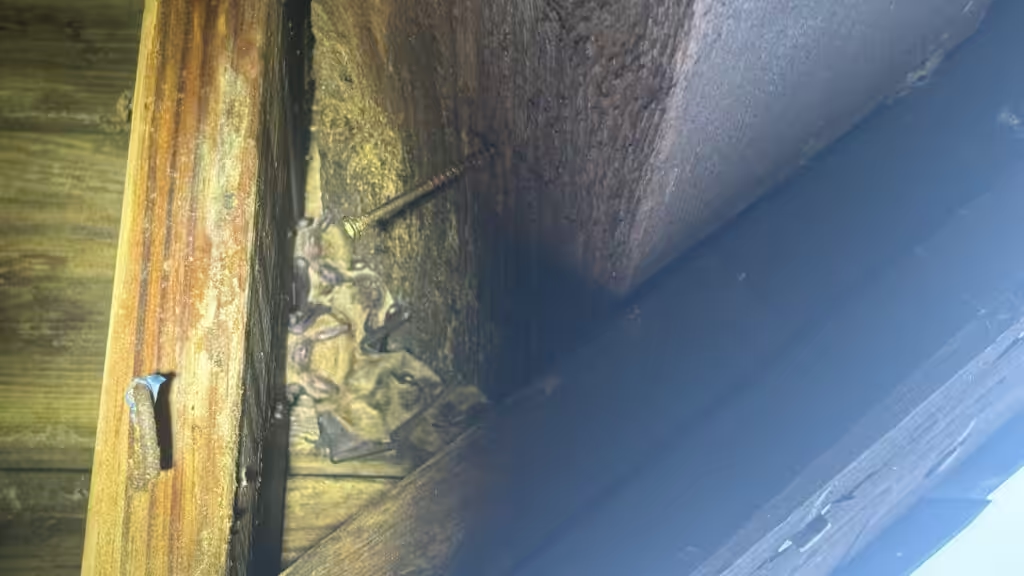
The clearest signs are scratching or squeaking along the edge of the roof at dusk and dawn, plus a musty smell or dark, crumbly droppings collecting in one spot. Noise at any other time of day usually points to a different animal, not a bat. Once you notice these signs, avoid sealing any gaps yourself, since bats trapped inside create a bigger problem, and Nebraska restricts when the actual removal work can legally happen. The right move is scheduling an inspection with a licensed team who can confirm what’s roosting and time the work for when it’s allowed.
At dusk, a scratching sound above the ceiling. A few minutes later, something brushes across the insulation, then goes quiet. If that pattern has repeated for a week or two around sunset, you likely have bats roosting in your attic. Below is how to tell for certain, plus how to remove bats from an attic without trapping them inside or breaking Nebraska’s bat protection laws.
We field calls across Omaha, Gretna, Papillion, Des Moines, and the surrounding area this time of year from homeowners who heard something they couldn’t place. Late summer is when maternity colonies get restless, and this year’s pups are just learning to fly on their own.
What Sounds Do Bats Make in an Attic at Night?
Bats sleep through the day, so the noise you’re hearing almost always lines up with dusk and dawn rather than the middle of the night or the middle of the afternoon.
Scratching, Squeaking, and Wing Flutter at Dusk
A few patterns worth listening for:
- A soft scratching or scuffling along the roof edge as bats reposition before heading out to feed
- High-pitched squeaking, especially if pups too young to fly are still in the roost
- Rustling or fluttering near vents, roof overhangs, or the triangle-shaped section near the roof peak right around sunset
- Near total silence during the day, since the colony is roosting and resting
The exact pattern of scratching and squeaking is worth comparing against what you’re hearing, since timing tells you almost as much as the sound itself. Daytime activity along the roofline points to a squirrel, since they’re active from sunrise to sunset. Middle-of-the-night noise is more likely a mouse or raccoon. Bats are the ones you’ll only hear at dusk and dawn, rarely any other time, and that timing alone separates them from most other attic wildlife.
Other Signs of Bats in Your Attic
Sound isn’t the only clue. Once a colony has been roosting for a few weeks, it leaves physical evidence behind.
Guano, Stains, and a Smell Near Entry Points
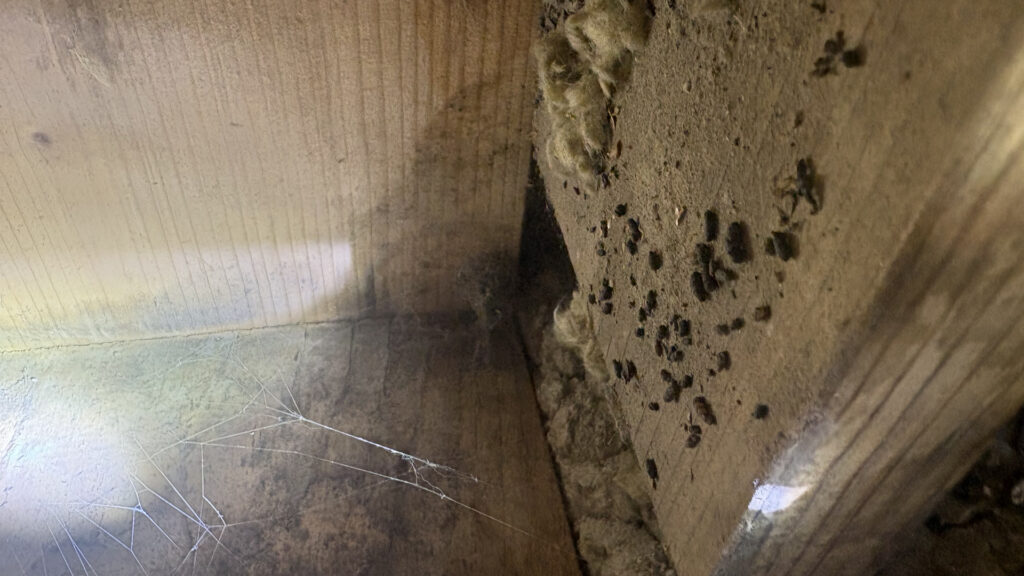
- Small, dark droppings, called guano, piled below a roost site and often crumbly with insect parts
- Dark, greasy rub marks around vents, gaps in fascia boards (the trim running along the roof edge), or the vents near the roof peak where bats squeeze through
- A sharp, musty smell coming from the attic that gets stronger the longer bats have been there
- Staining on ceiling drywall directly under a roosting spot, sometimes the first sign homeowners notice from inside the house
Guano buildup matters beyond the smell. It can grow a fungus tied to histoplasmosis, a lung infection, so we don’t recommend clearing it out yourself without the right respirator and protective gear.
Older homes around Omaha with wood roof overhangs and vents near the roof peak tend to have more entry points than newer construction with sealed vinyl venting. A gap along a rotted fascia board (the trim running along the roof edge) or a peak vent missing its screen is often all a bat needs, and once one finds a way in, the scent left behind tends to draw others back to the same spot year after year.
Why Late Summer Is Peak Bat Detection Season
Two seasonal factors line up in August to make this the time homeowners notice bats most.
Maternity Colonies Getting Ready to Move
Nebraska’s big brown bats form maternity colonies in spring, and by August the pups born in June are flying on their own. More bats are leaving the roost each night now than at any other point in the season, and that’s also why homeowners suddenly notice activity that’s been building for months without realizing it. The timing matters for another reason: Nebraska prohibits bat exclusion work from mid-May through early August, while pups can’t fly yet, so late summer is both when colonies are most active and when it finally becomes legal to seal them out. Once that window closes again in mid-October, exclusion stops working anyway, since the colony has settled in to hibernate.
Attic Heat Pushes Colonies to Shift Spots
A poorly ventilated attic can climb well past 120 degrees on a sunny August afternoon. Stretches of heat like that sometimes push a colony to relocate part of the group to a cooler section of the roof edge, which is one reason activity can seem to shift location over the course of a few weeks.
How to Remove Bats from an Attic the Right Way
Bats are protected under Nebraska law, and pesticides aren’t labeled for them anyway, so this isn’t a spray-and-done job, and the timing has to be right too.
One-Way Devices That Let Bats Out, Not Back In
What works is exclusion: finding every gap a bat could fit through (some are smaller than a dime), then installing one-way devices over the active entry points once the season allows it. Bats can still leave to feed at night, but they can’t get back in. After a few days with no bats returning, we seal the entry points for good and treat the affected insulation.
Why DIY Attempts Backfire
We don’t recommend homeowners attempt this alone. Sealing an entry point while bats are still inside traps them in your attic, and that creates a bigger problem than the one you started with while also risking a violation of state wildlife protections.
What to Do the Moment You Suspect Bat Activity
If you’re hearing dusk noise or watching guano collect in one spot, here’s what helps.
Skip the DIY Fixes and Call a Licensed Team
- Note the time of day you’re hearing activity and roughly where it’s coming from
- Hold off on sealing any exterior gaps yourself until an inspection confirms bats aren’t still inside
- Keep pets and kids out of the attic space if you can smell guano
- Call a team licensed for humane bat work rather than a general pest sprayer
We handle bat inspections and exclusion for homes across both our Omaha and Des Moines service areas, and we walk every attic ourselves before quoting a fix. A typical inspection takes less than an hour: we check the roof edge from outside for gaps and staining, then head into the attic to confirm roost location, colony size, and any insulation that needs treatment afterward. From there, we’ll lay out the exclusion plan and cost before any work starts. No trap check fees, no per-animal charges, no surprises on the invoice.
If that dusk scratching has gone on for more than a few nights, get ahead of it now. Schedule a bat inspection with our team so we can confirm what’s roosting and plan the exclusion for as soon as it’s allowed, or call the office nearest you.
Omaha, NE and surrounding areas: (402) 300-8168
- Omaha, NE
- Gretna, NE
- Papillion, NE
- Bellevue, NE
- Council Bluffs, IA
Des Moines, IA and surrounding areas: (515) 985-0772
- Des Moines, IA
- Ankeny, IA
- Waukee, IA
- Urbandale, IA
- Grimes, IA
